留言給外星人 訊息料2029年送達 [附圖]
本帖最後由 aia 於 2009-8-25 19:06 編輯
「地球からこんにちは」――太陽系外の惑星にメッセージを送るプロジェクトが、オーストラリアで進められている。
HelloFromEarthと呼ばれるこのプロジェクトは、科学誌COSMOSがオーストラリアのナショナルサイエンスウィーク向けに企画したものだ。一般の人からメッセージを集めて、米航空宇宙局(NASA)のアンテナで宇宙に送信する。送信先は太陽系外のGliese 581dという惑星で、生命が存在する可能性があるという。
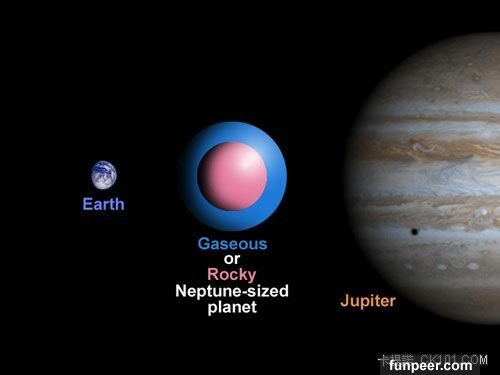 Gliese 581dの想像図 HelloFromEarthは8月12日から23日まで、Gliese 581dに送るメッセージをWebサイトで受け付けている。オーストラリア以外の国からも応募できるが、メッセージは英語のみで160文字まで。サイトには、「いつか会えたらいいですね」「あなたたちの星を訪問したいです」「星間バーベキューにご招待します」といったメッセージが寄せられている。
集められたメッセージはテキストファイルにまとめられ、バイナリコードに変換され、豪キャンベラにあるNASAの施設から送信される。Gliese 581dは地球から20.3光年の位置にあり、メッセージの到着は20年後の2029年12月ごろの予定。返事をもらえるとしたら、Gliese 581dの通信技術が高度なものでない限り42年かかるという。
 http://www.itmedia.co.jp/news/articles/0908/13/news019.html
澳洲‧網上留言給外星人‧訊息料2029年送達
- 國際
(澳洲‧坎培拉)上網留言給外星人!
澳洲政府為配合國家科學週,舉辦了一個網上留言活動,替人將訊息發送至距離地球約20光年的Gliese 581d行星,預計最快可於2029年到達。
不過,若真的有外星人回覆,地球人最快也要等到2049年才收到。
有興趣向外星人發送訊息的人,可於即日起至8月24日,登入網站HelloFromEarth.net,每次限寫160個字母或符號。之後,澳洲政府會利用美國太空總署(NASA)設於坎培拉外圍的太空探測站,將眾人的留言向格利澤581d以光速發送。
這網站形容,此舉仿似擲向天際的瓶中信。
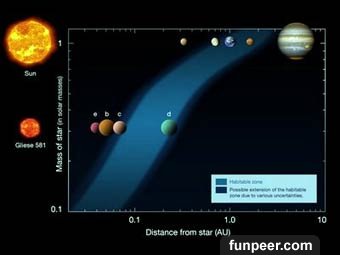
科學家於2007年發現Gliese 581,這顆圍繞紅矮星Gliese 581公轉的行星,運行的軌道正處於適合居住的範圍內,意味著它可能有液態水和生物存在。
http://www.sinchew.com.my/node/126421?tid=2
Earth texts planet Gliese 581-d with Hallo messages 8/12/2009 by: Darleen Hartley - Get more from this author
In conjunction with Australia’s National Science week, that country’s Canberra Deep Space Communication Complex, with NASA’s cooperation, will send 160 character, Twitter-like messages into space. Their target is Gliese 581-d, an exoplanet (one that orbits other stars) in the constellation Libra about 20.3 light years away from Earth.

Planet Gliese 581-d, Picture credit: ESO 2007
The Gliese 581 planetary system has 4 known planets. The one designated as "d" is the most likely, according to recent determinations, to be habitable [even though the "581-c" is also high on the list]. While the planet is orbiting its red star every 66.8 days, Canberra will try to deliver messages from Earth.
"Can you hear me now?" Well, "Not quite yet" will be the response. Delivery isn’t being sent via UPS special two-day air. Instead, it will take about 20 years to arrive. Equivalent response time will turn youngsters into gray-haired retirees before they receive an acknowledgement.
The project isn’t so much about sending a message, but what message will be sent. The project"s spokesperson, Wilson da Silva, explains: "What"s interesting is not just whether there"s anyone listening, but what the public will say to intelligent life on another planet,"
As of this writing, 2,259 messages totaling 253,866 bytes had been recorded – in English. You can see them or record your own message at Hello From Earth. Postings are hopeful, such as slightly altered John Lennon lyrics: "Imagine all the planets living life in peace." A few are fearful: "Please DONT nuke us...we"re NOT all that bad as a civilization." Then, there is the sensible and curious: "Hello extraterrestrial life. I hope they provide a dictionary with this. I am settling an argument, does all intelligent life reproduce sexually?" All combined, the messages could make a great sociological study of earthlings, regardless if 581-d ever receives, or understands, them.
Most evidence for exoplanets like 581-d is extrapolation from the minute wobble in a star caused by the gravity of an orbiting planet. However, in November, 2008,
the Hubble space telescope got the first visible light images of a planet outside our solar system. It is orbiting the star Fomalhaut which is 25 light-years away in the constellation Piscis Austrinus. Scientific investigation of the solar system is also carried out with unmanned automated spacecraft. The Deep Space Network (DSN) guides and controls them with two-way communications, bringing back images and scientific information. DSN uses steerable, high-gain, parabolic reflector antennas. Tracking facilities are located near Canberra, Australia, California"s Mojave Desert, and Madrid, Spain.
Measurements of Gliese 581-d’s orbit "place it firmly in a region where conditions would be right for liquid water, and thus life as we know it," astronomer Michel Mayor said. Estimates of how many habitable planets could exist emanate from an equation by Dr. Frank Drake, an astronomer and astrophysicist who co-organized the first SETI conference. He explains: "I listed all the factors one needed to know to predict the number of detectable civilizations in our galaxy. I recognized that if they were all multiplied together, one got an estimate of the number of detectable civilizations." His mind boggling equation is: N = R* x fp x ne x f1 x fi x fc x L. An article in Cosmos magazine explains the elements of his formula.

Dr. Frank Drake and Carl Sagan designed Pioneer"s aluminum plaque, picture courtesy of NASA
Dr. Drake joined Carl Sagan in designing the gold anodized aluminum Pioneer plaque, the first physical message sent into space. They designed it to be understood by any extraterrestrials who came across it. The Canberra messages may not be as understandable to inhabitants on Gliese-d, because we are betting that Gliesians can communicate in English. Perhaps today’s grammar school children should be studying Gliesian instead of any Earth-based foreign language, just in case they get an answer from 581-d by the time they are ready to retire.
Regardless of the language you select, your message must be submitted to the Canberra project at Hello From Earth by 5pm Monday 24 August 2009 Sydney time (07:00 GMT Monday 24 August 2009).
© 2009 Bright Side Of News*, All rights reserved.
http://www.brightsideofnews.com/news/2009/8/12/earth-texts-planet-gliese-581-d-with-hallo-messages.aspx
2007年的新聞
宇宙「第二顆地球」! 天文大發現
 更新日期:2007/04/25 22:37 記者:張家齊
 國際天文學界,今天有重大發現!歐洲天文學家今天宣布,他們為地球找到兄弟!原來天文學家觀測到距離地球20.5光年,太陽系外的一顆行星,不管在星球溫度或是重力,都和地球非常相似,這個宇宙中的「第二顆地球」,可能有生命。
天文學家試圖尋找第二個地球的願望,總算有了頭緒,在太陽系外不遠,繞著這顆紅矮星的行星,Gliese 581,據說擁有地球般的條件,可能有宜人的溫度、有水、甚至有生命。天體物理學家史提夫馬讓:「這是目前最像地球的行星,即便它根本不是地球。」
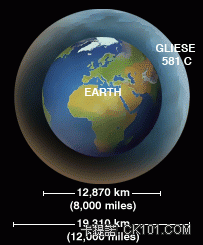
天文學家說,比地球大5倍的這顆行星,只距離地球20.5光年,也就是1億2千萬兆公里之外!但已經算非常近了,由於紅矮星的溫度比太陽低,讓這個「地球的哥哥」不至於烤焦,而表面重力是地球2倍,水也留得下來。
天體物理學家史提夫馬讓:「我們不知道這樣的行星,會跟地球差多少,但它是最像地球的一顆,在人類發現的200多顆行星當中。」
歐洲天文學家在智利這個天文台,運用最新科技,還發現了這顆行星在軌道運行的速度,非常不同。天體物理學家史提夫馬讓:「它的速度就像特勤人員,在遊行中跑在總統禮車旁般,那真的是非常慢,這是以外太空的標準而言,而這發現是偉大的技術突破。」
不過,科學家也說,目前還沒辦法直接觀察到地球哥哥的表面,或許在20年後,才有辦法看到光譜分析後的第一張照片。
http://adleylee.pixnet.net/blog/post/10874308
2012年重生預言~也有提到這個星球
謎之宇宙!!!~不知道那邊有沒有 "生 物"喔!!!
|
本篇 |
不想錯過? 請追蹤FB專頁! |
 | 喜歡這篇嗎?快分享吧! |


相關文章






不思議事件